A complete large-breed growth diet
Choose food labeled complete and balanced for growth, including the growth of large-size dogs. This is designed to provide protein, fat, vitamins and minerals in appropriate proportions.
Healthy beginnings for a large-breed puppy
How we support our puppies with measured meals, attentive daily care and veterinary examinations—and how families can continue those habits at home.
Care for the whole puppy
Bernese Mountain Dogs mature into powerful, heavy-boned adults. During puppyhood, the goal is not to make them grow as quickly as possible; it is to provide balanced nutrition, maintain a lean body condition and monitor development over time.
We observe appetite, energy, stool quality, movement and general behavior as part of everyday care. These observations are useful because a change in a puppy’s normal routine can be an early reason to speak with a veterinarian.
Large-breed puppy nutrition
A puppy’s exact portions depend on the food, age, weight, activity and body condition. The feeding chart on the package is a starting point; a veterinarian can help adjust it for the individual puppy.
Choose food labeled complete and balanced for growth, including the growth of large-size dogs. This is designed to provide protein, fat, vitamins and minerals in appropriate proportions.
Measure each meal and review the puppy’s shape regularly. Ribs should be easy to feel beneath a light covering, with a visible waist when viewed from above. Ask your veterinarian to demonstrate body-condition scoring.
Training treats still count as food. Keep extras modest so they do not unbalance the daily diet or replace the nutrients supplied by complete puppy food.
Do not add calcium, vitamins or joint products simply because the puppy is a large breed. Supplements can change the balance of an otherwise complete diet and should be used only with veterinary direction.
Our puppies at the vet
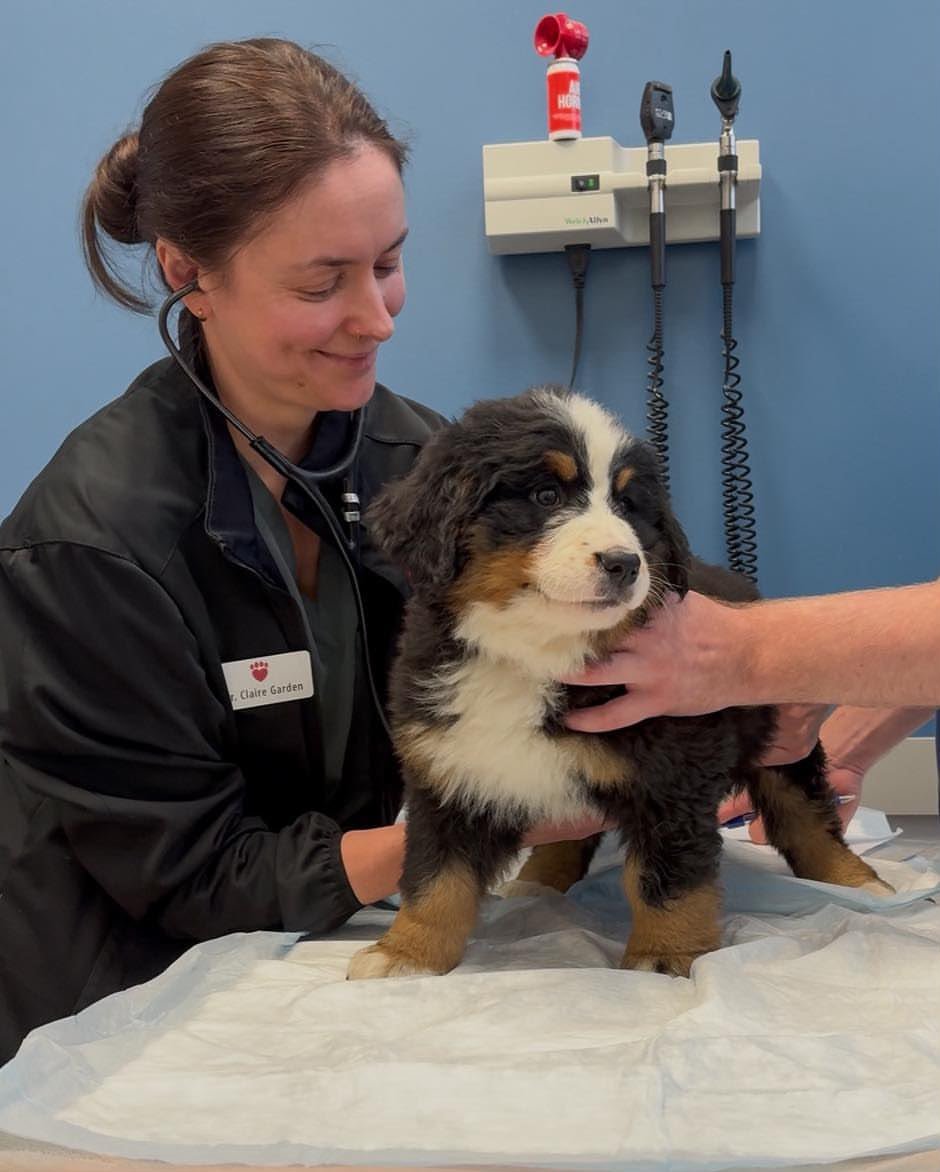
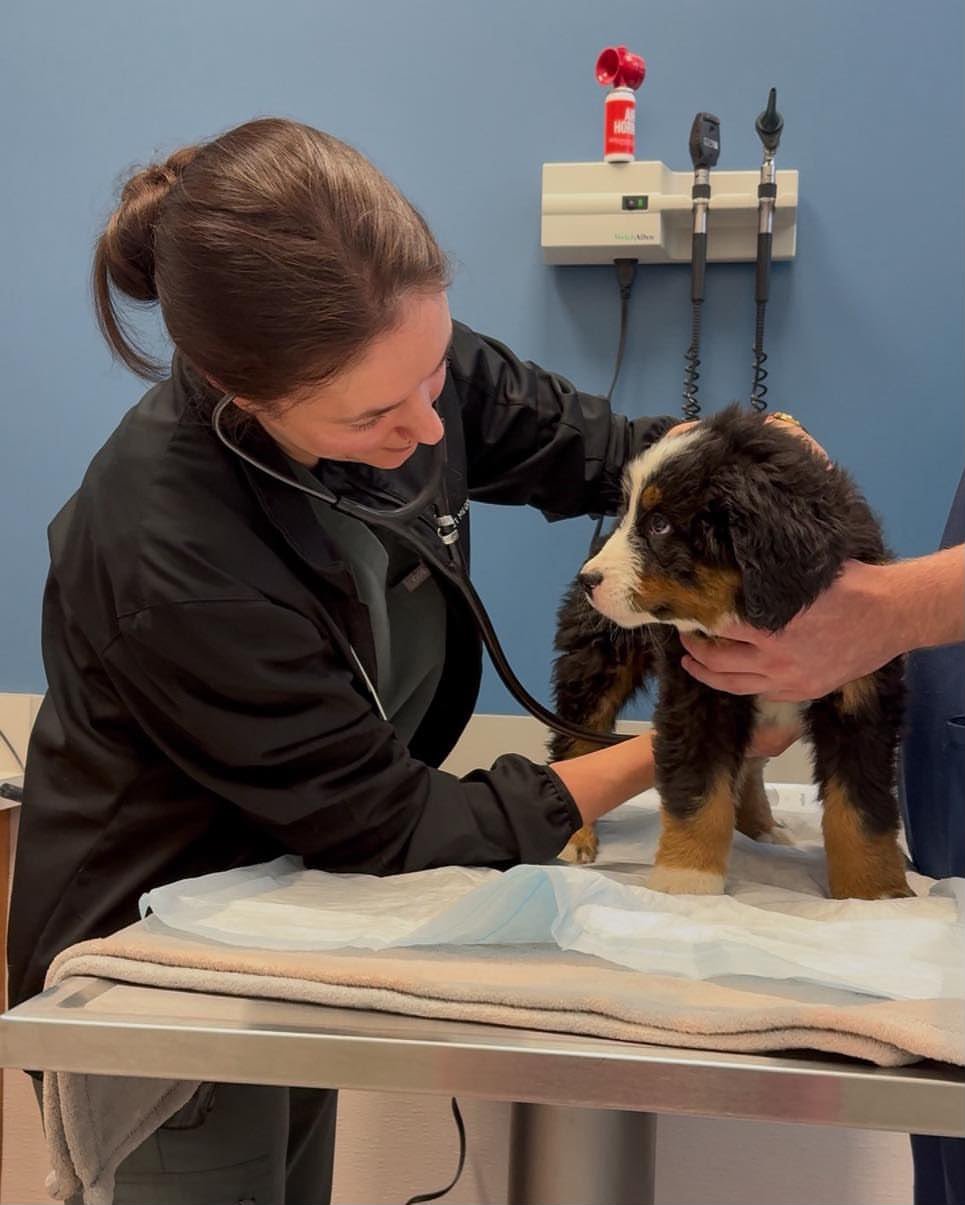
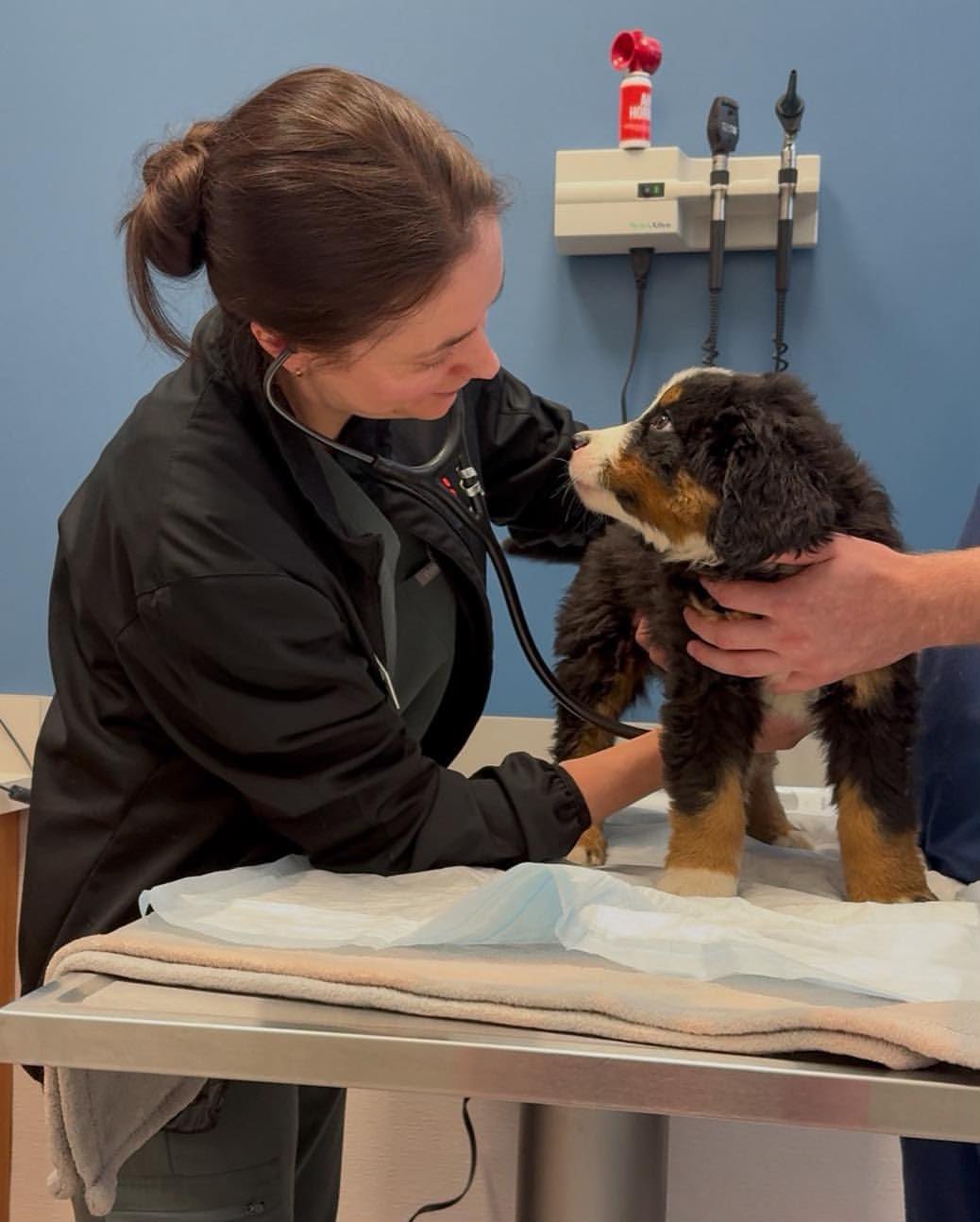
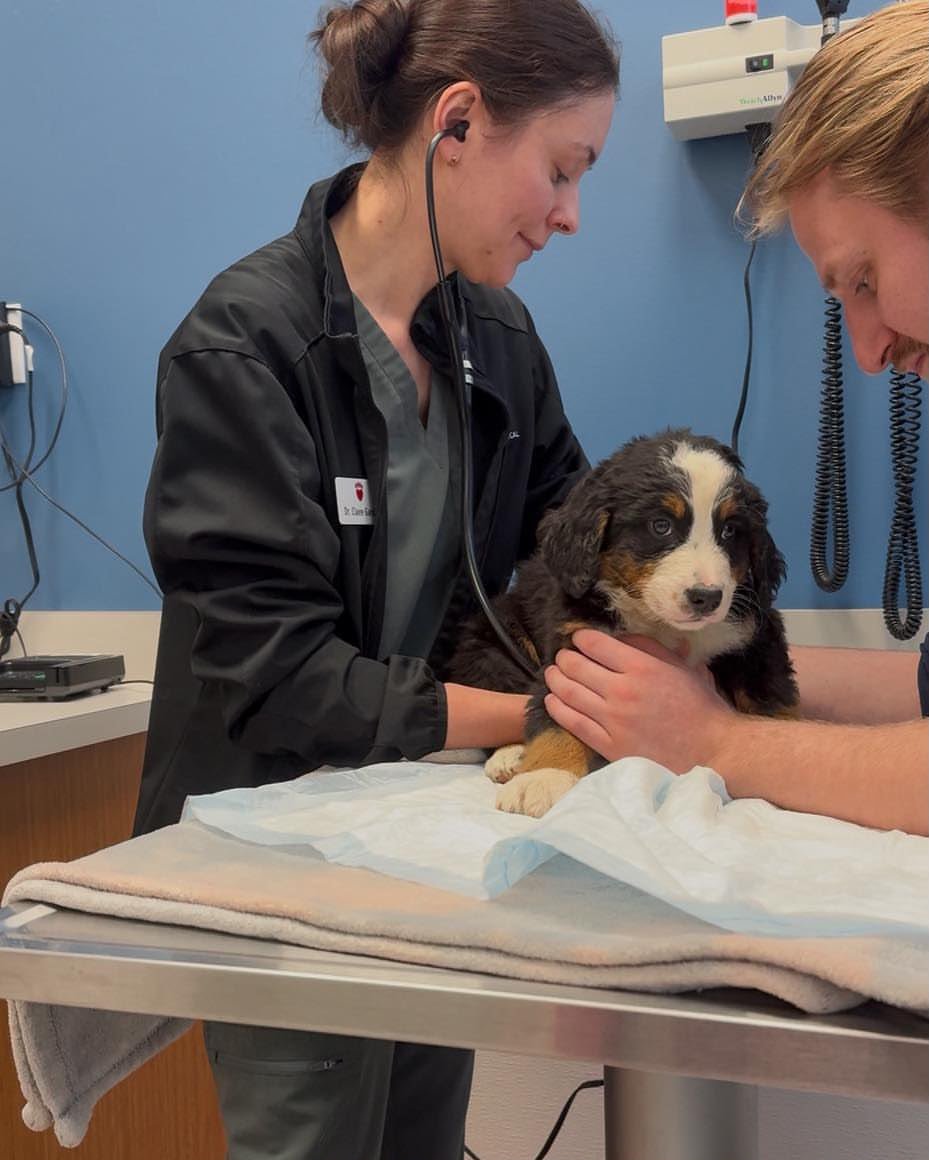
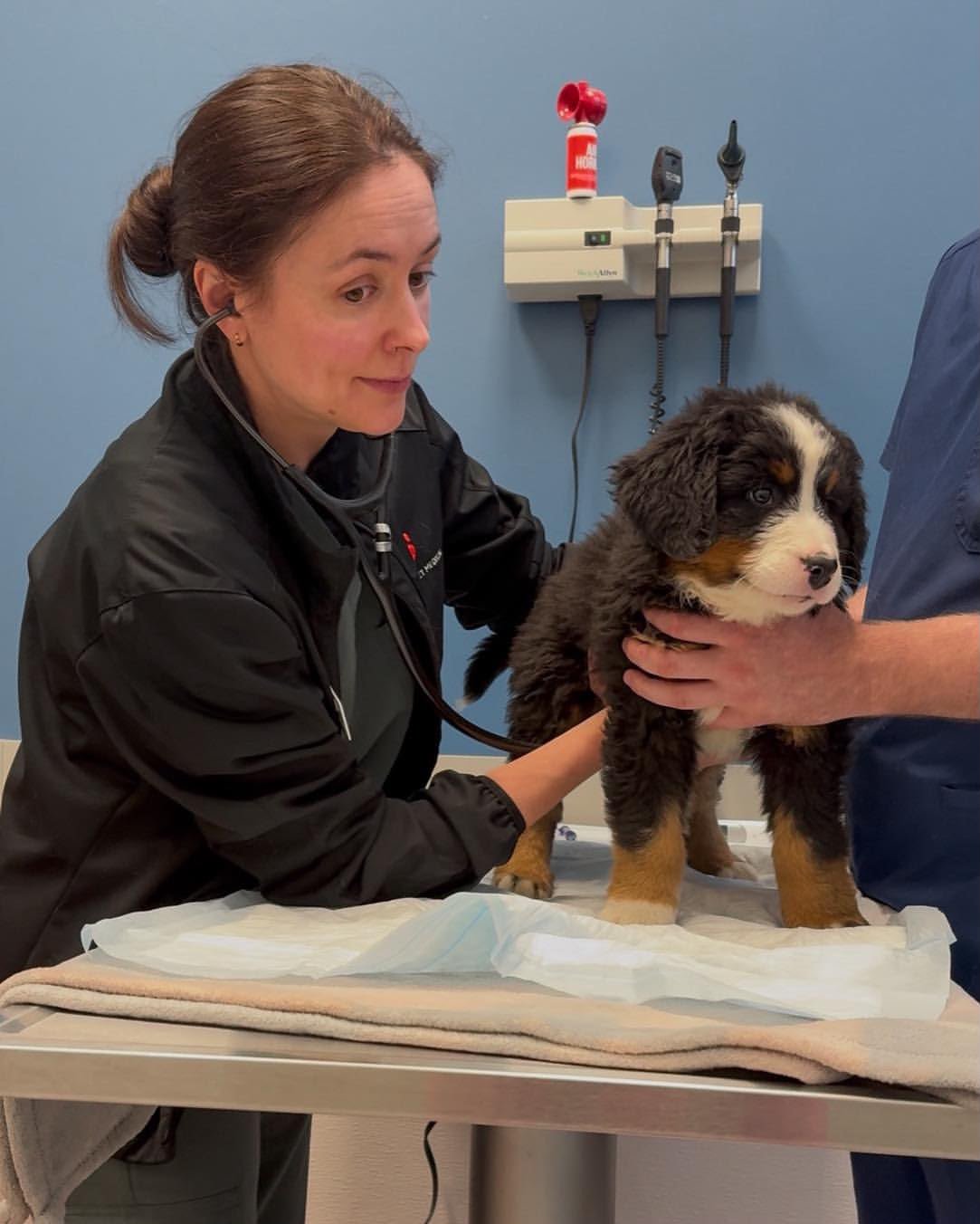
These photographs show our Bernese Mountain Dog puppies at the veterinary clinic for hands-on examinations. A veterinary visit gives a licensed professional the opportunity to assess each puppy directly and helps us discuss any observation that needs attention.
During a typical puppy wellness examination, the veterinarian may listen to the heart and lungs, examine the eyes, ears, mouth, skin and coat, feel the abdomen, observe movement, record weight and evaluate overall condition. The veterinarian determines which examinations, vaccines, parasite-control steps or follow-up care are appropriate for the individual puppy.
New families should arrange an appointment with their own veterinarian soon after arrival, bring every health document provided with the puppy and establish a personalized preventive-care schedule.
The transition home
A new environment can affect appetite and digestion. Begin with the puppy’s familiar food and schedule. If a change is needed, ask your veterinarian how to transition gradually rather than changing food abruptly.
Notice energy, movement, appetite and stool, then offer a measured meal.
Use short, age-appropriate activity and allow plenty of uninterrupted sleep.
Look for changes in eating, drinking, elimination, comfort or behavior.
When to seek help
Call your veterinarian for persistent loss of appetite, repeated vomiting or diarrhea, unexplained weight change, coughing, unusual tiredness, lameness, pain or any behavior that is clearly different from normal.
Reliable guidance
Nutrition-assessment tools and questions to help families make informed feeding decisions.
Visit WSAVA →Veterinary guidance on nutritional assessment and weight management through every life stage.
Visit AAHA →Breed-specific information about recommended health testing for Bernese Mountain Dogs.
Visit BMDCA →Prepare for your puppy
Review daily puppy care or contact us with questions about an available puppy.